


“This is not museum theatre. This is theatre that wants to grab you by the tunic and pull you into the arena.”

Interview with Professor Tim Boatswain: Bringing Roman Theatre to Life for OVO at St Albans Roman Theatre
As St Albans Roman Theatre prepares to host “A Roman Theatre Spectacle”, we spoke to the playwright Professor Tim Boatswain about the inspiration behind the script, the enduring power of Roman drama, and why the Roman Theatre makes the perfect setting for a play about pagan entertainment.
What inspired you to write “A Roman Theatre Spectacle”?
I have always been a student of ancient drama. Back in 2023, OVO performed a script I wrote on the essence of Greek tragedy. Having explored ancient Greek drama, I thought it would be interesting and entertaining to write about Roman theatre, to be performed in St Albans Roman Theatre, where such works might conceivably have been staged once before. Unlike the solemn, reverent atmosphere we sometimes associate with ancient drama, Roman performances were raucous, irreverent, and wildly popular. They were the music halls, the sitcoms, the soap operas of their day. I wanted to capture that rowdy, backstage chaos while also showcasing the extraordinary range of Roman writing — from the slapstick farce of Plautus to the blood-soaked revenge tragedies of Seneca.
The play blends excerpts from Plautus, Terence, and Seneca with a fictional backstage story. Why did you choose that structure?
Great question. Roman theatre is often studied in fragments—a comedy here, a tragedy there—but rarely as a living, breathing world. By setting the excerpts within a rehearsal room on the day of a performance, I could show how these very different genres coexisted. The actors bicker about whether comedy or tragedy is superior. The manager despairs. The chorus comments wryly on the action. It becomes a play about theatre itself, which I think audiences will find immediately engaging, even if they know nothing about Roman drama.
What can audiences expect from the performance at the Roman Theatre?
I believe they can expect a wonderfully entertaining hour. There is physical comedy, dramatic monologues, a touch of magic, and a great deal of laughter. The actors perform short, accessible excerpts: the boastful soldier from Plautus, the paranoid miser, Medea’s terrifying revenge, and the family squabbles of Terence. I have tried to keep the language vivid and punchy. And because the actors also play the backstage drama, the audience gets to see the characters behind the characters—the diva, the clown, the peacemaker.
What makes performing a play in the Roman Theatre so special?
The sense of history is a total experience. We do not know whether any of the plays I have selected were ever performed in St Albans Roman Theatre, but the idea that we could be reliving a performance here after nearly two thousand years is simply amazing.
The play concludes with the line: “From Plautus’ jest to Seneca’s cry, the stage reflects both low and high.” Is that the central message?
Yes, absolutely. Good theatre, like good writing more broadly, should make us laugh and think and feel. Plautus gives us the joy of the body—slapstick, misunderstanding, greed. Seneca gives us the agony of the soul—betrayal, revenge, grief. Terence gives us the dilemmas of the heart—family, duty, love. A culture that produced all three was a culture of astonishing richness. Our play is a celebration of that richness.
Do you think Roman theatre still speaks to modern audiences?
Without question. The boastful soldier lives on in every pompous politician. The miser who hoards his gold and trusts no one is recognisable to anyone who has watched a reality TV show about hoarders. The parents who disagree about how to raise their children—strict or lenient—are still arguing today. And Medea… well, Medea is timeless. Betrayal, rage, the destruction of what we love most. We like to think we have evolved, but human nature has changed very little. That is why these plays still work.
What do you hope audiences take away from the evening?
I hope they laugh. I hope they are startled by the power of Seneca’s language. And I hope they leave with a new respect for Roman culture—not just the legions and the roads and the villas, but the human heart that beat beneath the togas. This is not museum theatre. This is theatre that wants to grab you by the tunic and pull you into the arena.
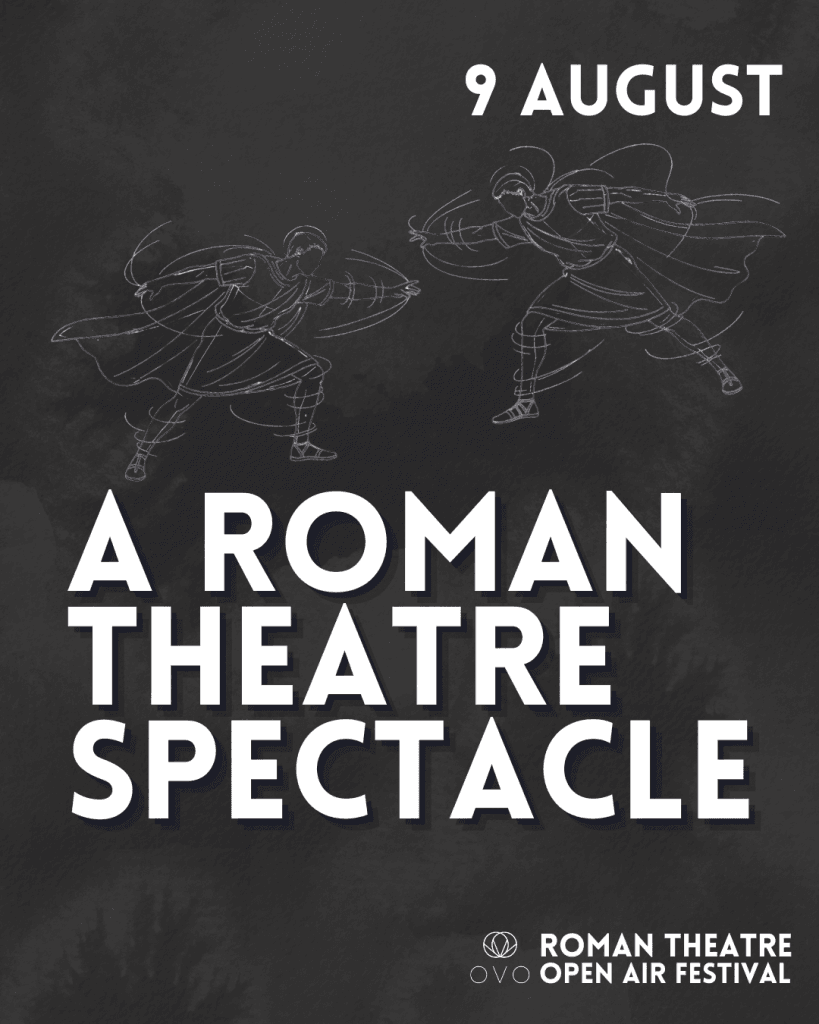
“A Roman Theatre Spectacle” will be performed at the OVO Roman Theatre Festival on 9th August in St Albans. For bookings, please click the link below.