


“Our version is a chance to experience that original adventure, but told in a fast, funny, irreverent and very theatrical way. It’s swashbuckling, romantic, silly, chaotic and full of theatrical invention.”
Can you introduce yourself and touch on your background in theatre and with Ha Hum Ah?
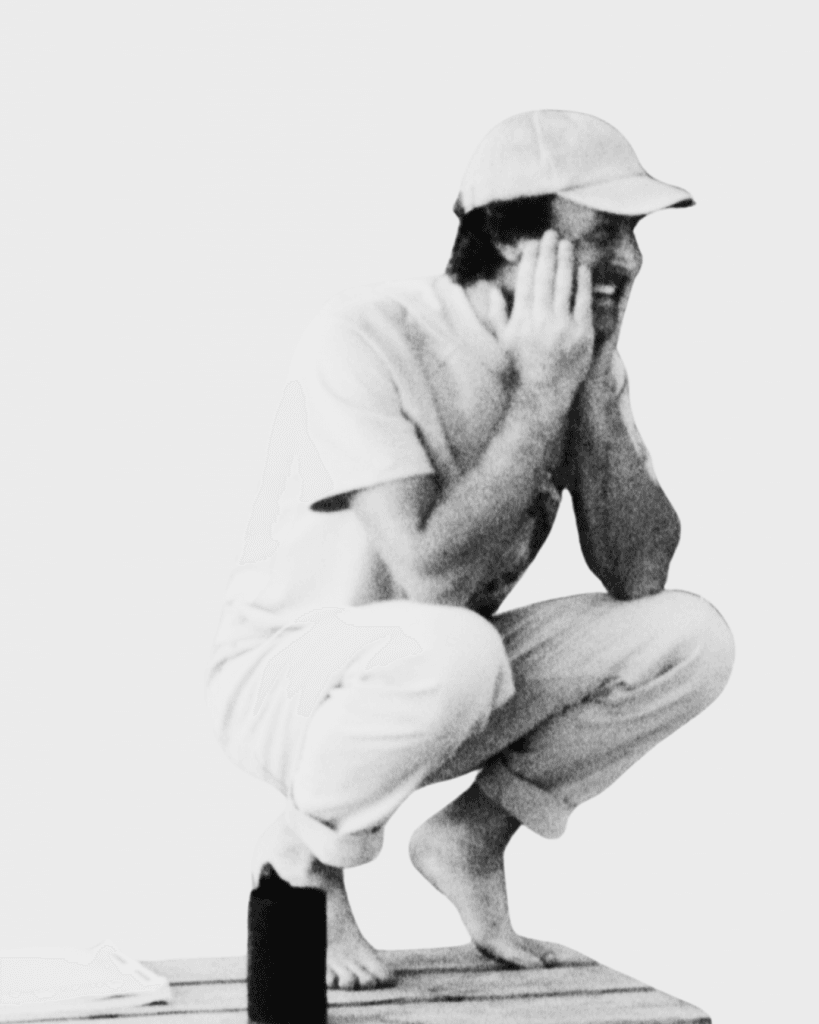
My name is Ben Kernow. I’m an actor, writer and theatre-maker, and I run Ha Hum Ah Productions, a Cornwall-based theatre and film company.
I originally trained as an actor and still work as an actor, so my background has always been rooted in making work from the inside of the rehearsal room. Over the years that’s spanned national tours, repertory theatre, outdoor theatre, new writing and adaptations. A real mix of things.
I set up Ha Hum Ah as a way to create more of my own work, but also to create a space where other creatives could do the same. The company has always been about collaboration. Actors, directors, writers, designers and makers all bringing ideas to the table and shaping the work together. We’re interested in theatre that feels bold, playful, inventive and accessible. Work that can reach audiences in all sorts of spaces, from traditional theatres to woodland clearings, cliff tops and outdoor venues.
What inspired you to bring The Scarlet Pimpernel to the stage? Do you have any personal connection to the show?
A couple of years ago, I bought a big collection of classic novels. It was one of those slightly over-ambitious attempts to finally read all the books people always talk about, but that I’d never quite got round to reading myself.
The Scarlet Pimpernel was one of them. I knew the name, of course. I knew the image of the heroic masked figure, the disguises, the daring rescues, this person who appears out of nowhere, saves the day and disappears again. But I didn’t really know the story first-hand.
So I came to it quite freshly, really. I wasn’t adapting something I had grown up with or had a deep personal nostalgia for. It was more that I discovered this story and thought: “Hang on, this is brilliant.” It has adventure, romance, espionage, comedy, danger, disguise, and at the heart of it, a really interesting relationship between two people who are both keeping enormous secrets from one another. That immediately felt like something that could be great fun on stage.
Tell us more about The Scarlet Pimpernel for readers who are unfamiliar with the story.
The Scarlet Pimpernel is one of those stories lots of people have heard of, but perhaps fewer people know in detail.
It began life as a stage play by Baroness Orczy before becoming the novel that is now more widely known. The original play was a huge audience success, even if the critics weren’t immediately convinced, and from there the story went on to become this enduring classic.
The story is set during the French Revolution, when the guillotine is busy and the aristocracy are trying very hard not to lose their heads. Into that world comes the mysterious Scarlet Pimpernel. A daring English hero who secretly rescues people from execution and smuggles them out of France.
But what I really love about the original novel is that it isn’t just about Sir Percy Blakeney, the man behind the mask. A huge amount of the story centres on his wife, Marguerite. She’s caught in an impossible situation. Her brother’s life is threatened by Chauvelin, the ruthless agent of the French Republic, and she is forced into helping him uncover the identity of the Scarlet Pimpernel.
So she’s trapped between loyalty, love, fear and survival, and then discovers that the man she may have betrayed is actually her own husband. Which is awkward.
So yes, there are disguises, swordplay, spies, escapes and all the swashbuckling adventure you’d hope for, but there’s also a proper emotional engine underneath it. It’s about trust, secrecy, marriage, courage and what you do when every choice costs you something.
How did you approach adapting the novel — tell us about your process?
Whenever I adapt a novel, the process usually starts very simply. I read the book with a pen and paper beside me.
As I’m reading, things start to jump out. Sometimes it’s a scene that feels essential to the narrative. Sometimes it’s a line of dialogue, or a character dynamic, or just an image that feels theatrical. I try not to be too rigid at that stage. I’m looking for what excites me, what feels alive, and what I think an audience would enjoy seeing on stage.
With adaptations, I’m always keen to be honest to the source material. That doesn’t mean being slavish or treating the book like a museum piece. You have to make changes because theatre is a completely different form. But I do want the original story to be the cornerstone. You start from there, and then you ask, what is the most theatrical, inventive and entertaining way of telling this?
Then, once we get into the rehearsal room, the script becomes something to play with. We’re a very physical, collaborative company, so we test things on their feet. We see what works, what doesn’t, what can be made funnier, sharper or clearer. Sometimes the best solution to a narrative problem comes from someone trying something ridiculous in the room and everyone going “Actually, that’s it.”
So the process is part writing, part adaptation, part play, and part controlled chaos.
How do you approach directing a play with so much multi-rolling and so many location changes?
In a slightly unusual way, because this production doesn’t have a traditional director in the room.
The way these shows tend to develop is that the same core group of us, myself, Larry and El, lock ourselves away in a barn on a farm on the north coast of Cornwall and try to make each other laugh. That sounds flippant, but it’s genuinely a big part of the process. If we can surprise each other, delight each other or make each other laugh, there’s usually something worth following.
The multi-rolling and the location changes are really about embracing theatricality. We’re not trying to recreate everything literally. We’re not building a perfect ballroom, then a perfect seedy Dover pub. The fun comes from asking how little you need to suggest a world, and how cleverly you can shift from one place or character to another.
A hat, a wig, a chair, a change of posture, a ridiculous accent, suddenly you’re somewhere else.
That’s the joy of theatre. You invite the audience to use their imagination with you. The challenge is not something to be hidden, it becomes part of the entertainment. How do three actors create a revolution, an opera house, a ballroom, a pub, a cliff edge and half the French Republic? You lean into the impossibility of it and make that part of the game.
This play is full of wit and chaos — which moments of the play make you laugh the most?
With this kind of show, the funniest moments are often the small ones. It’s usually not the big set-piece gag that gets me most. It’s the tiny little seed of an idea, a character doing something odd, a moment that should be inconsequential, a bit of behaviour that gets blown completely out of proportion.
That’s where the clowning element comes in. A very small problem can suddenly become an enormous crisis. Someone can’t get through a door properly. A disguise is slightly too successful. A character is trying to remain dignified while everything around them is collapsing.
Those are the moments I love, when the story is still moving forward, but the human ridiculousness of it all starts bubbling up around the edges.
Why should audiences come to see the show? Who would the show appeal to?
I think audiences should come because The Scarlet Pimpernel is a genuinely brilliant story, but it’s one that many people know more by reputation than by detail.
Most people have heard the name. They know the idea of the dashing masked hero. But the original story, with Marguerite at the centre, the marriage, the betrayal, the danger, the politics, the disguises, is full of surprises.
Our version is a chance to experience that original adventure, but told in a fast, funny, irreverent and very theatrical way. It’s swashbuckling, romantic, silly, chaotic and full of theatrical invention.
I think it will appeal to anyone who enjoys classic stories given a bit of a kick. If you like outdoor theatre, comedy, adventure, multi-rolling, wigs, disguises, French Revolution panic, or three actors attempting to do something wildly overambitious with great confidence and limited resources, then this should be for you.
More than anything, it’s a proper night out. It’s fun. It’s playful. It doesn’t take itself too seriously, but underneath all the chaos, there’s a real story about love, trust and courage.
What is the ethos of Ha Hum Ah as a theatre company? What is unique about Ha Hum Ah?
Ha Hum Ah is a creative-led company. We’re not really a group of people sitting in an office deciding what theatre should be. We’re much more of a troupe, for want of a better word.
The work is made by the people in the room. Everyone has ownership over the finished thing. Of course, people have different roles and responsibilities, but we’re interested in a process where actors, designers and collaborators can bring ideas beyond the narrow definition of their job.
That feels really important to me. Quite often, as an actor, you can feel like the final piece of the process, the person who puts on the costume, stands where they’re told and says the lines. With Ha Hum Ah, we try to work differently. The performers are part of the wider creative conversation. They help shape the world of the show, the tone, the theatrical language.
Collaboration is at the core of it. We want to make work that feels alive because it has genuinely been built by the people performing it. That’s where the joy comes from.
And being based in Cornwall is a huge part of who we are. We make work from here, with all the inventiveness and resourcefulness that comes with that. We’re used to making theatre in unconventional places and finding imaginative ways to reach audiences who might not always have easy access to it.
You are a Cornwall-based theatre company. What are you most looking forward to about bringing The Scarlet Pimpernel to The Roman Theatre in St Albans?
There are a few things I’m really excited about.
Firstly, I’ve never been to St Albans, so I’m genuinely looking forward to exploring it. One of the great joys of touring is that you get to visit places you might not otherwise go to, and you get to understand communities and audiences in a really particular way.
Secondly, outdoor theatre is so deeply ingrained in the way a lot of theatre is made in Cornwall. We’re used to performing in extraordinary landscapes and unusual spaces, where the environment becomes part of the event. There’s something really exciting about taking that Cornwall-born approach to a new place and a new audience.
And The Roman Theatre looks like an incredibly beautiful and atmospheric space to perform!
There’s also something lovely about bringing a slightly mad, very playful Cornish theatre company into a venue with that much history behind it. Hopefully the ghosts of ancient theatre will approve.
The Scarlet Pimpernel has been described by Marvel Comics co-creator Stan Lee as “the first superhero”. What superhero would you like to be, which powers would you choose to have, and why?
I completely agree with Stan Lee. The Scarlet Pimpernel really is one of the first superheroes.
He has the secret identity, the alter ego, the disguises, the impossible rescues, the theatrical entrances and exits. You can trace so much of the modern superhero back to him, which is amazing when you think about it.
As for what superhero I’d like to be, I’m tempted to say something very impressive and noble, but honestly, flying would be extremely useful. Being able to fly would mean no traffic and no need to buy plane tickets. As someone who tours a lot, that feels pretty unbeatable.
Although if there were a chameleon-style power where I could borrow everyone else’s powers whenever I needed them, I’d take that too. That feels like a sensible loophole.
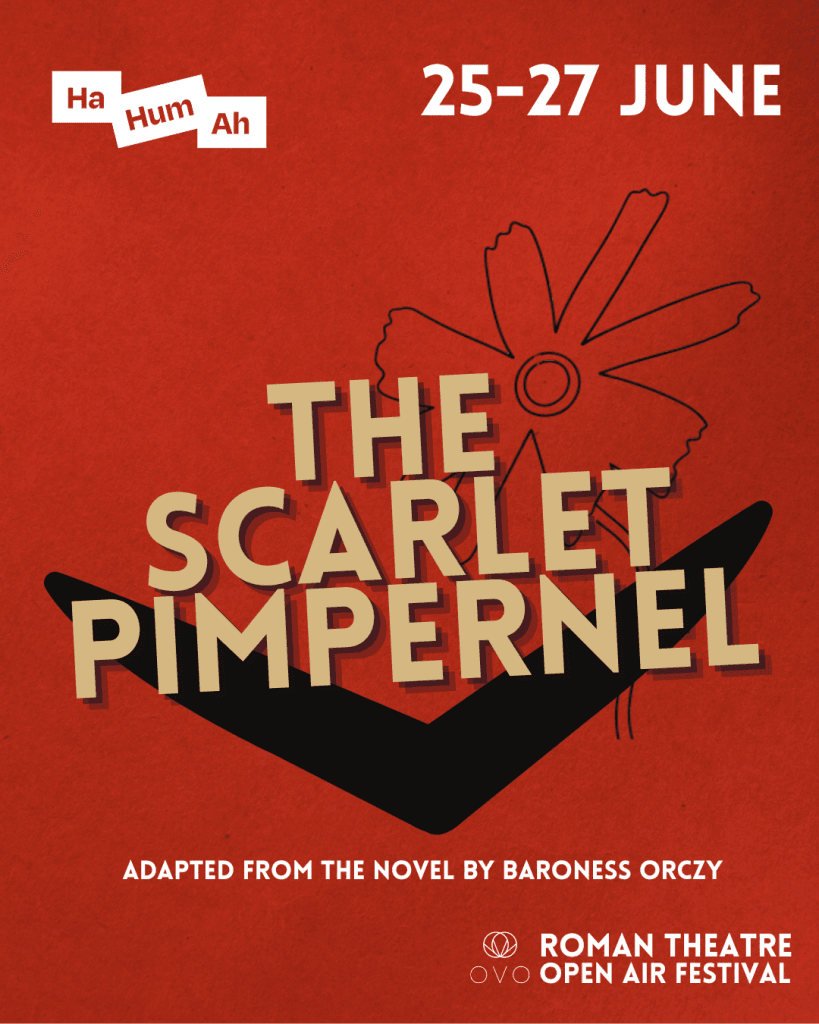
The Scarlet Pimpernel will be performed at the OVO Roman Theatre Festival from 25th-27th June in St Albans. For bookings, please click the link below.